The floating markets of the Mekong Delta in Vietnam are one of the most fascinating attractions in the country. Established as local centres of trading for generations, the floating markets are places where rivers and canals intersect. Traders sell and buy goods directly from their boats, mostly fruits and vegetables from local farms, but also local crafts, candy, petrol, live animals, and hot bowls of soup!
There are a number of floating markets that are busy every day, and tourists are welcome to observe if they make the boat journey to the correct location. Depending on the market, they are usually busiest in the very early hours of the morning. For visitors willing to rise early, they are very lively and colorful, and a wonderful way to watch local life in Vietnam in this unique corner of the world.

What is the Mekong Delta?
The Mekong Delta is a riverine region of southwestern Vietnam where the Mekong River fans out into 9 branches and reaches the sea. It sprawls over 40,500 square kilometres (25,000 square miles) of waterways, rivers, islands and communities.
The Mekong Delta is also very biodiverse, with many animal species and ecosystems. Known as the ‘rice bowl’ of Vietnam, the Mekong Delta is a major food producer for the world, and for millions of Vietnamese people.
History of Vietnam’s Floating Markets
Trading goods on the Mekong can be traced back centuries, when the Mekong Delta was inhabited by various ethnic groups such as Vietnamese, Khmer, and Cham peoples. Populations living on the Mekong Delta were also influenced by the pre-Khmer civilizations of Funan (1st to 6th century CE) and Chenla (6th to 9th centuries), which had extensive trading networks in the region. The Mekong Delta also attracted peoples from the north of Indochina, drawn by the rich food and water resources of the delta.
The natural geography of the Mekong Delta led to the emergence of the iconic floating markets. The tangled river systems make water travel much easier than land travel, especially when carrying heavy cargoes of fresh produce. Where rivers intersected, trading hubs were born, where people could find a variety of goods from different areas. The seasons and tide also dictated the availability and price of local products.
In recent centuries, the floating markets expanded in size. During the Nguyen Dynasty in the 19th century, some of the floating markets we see today were established. During the French colonial period and the Vietnam War, the floating markets were affected by the political and military conflict. After 1975, when Vietnam was reunified, the floating markets were vital in continuing the economy of the Mekong Delta, despite the development of new roads and modern supermarkets. In recent decades, the floating markets took on a new role as tourist attractions.

Visiting the Floating Markets of the Mekong Delta
Visiting a floating market is easy, and cities such as Can Tho are well-established jumping off points that arrange organised boat trips to the markets. There, boats piles high with colourful watermelons and pineapples, green vegetables, oranges and chilis provide lively colour to the cacophony of boats bobbing on the calm caramel waters.
There are many markets, some large and some small. Here are the 6 major floating markets in the Mekong Delta.
Cai Rang
The biggest and most famous floating market in the Mekong delta is called Cai Rang, located about 45 minutes boat ride from Can Tho city. The best time to visit is very early (6am to 7am), in which time hundreds of boats with different products arrive. Produce and money changes hands from boat to boat, and sellers place a sample of their produce on long poles high in the air to advertise their stock. There are also floating restaurants, cafes and even floating petrol stations to refill motorised vessels.
Phong Dien
Phong Dien floating market is smaller and less touristed than Cai Rang, and is located about 20km (12miles) from Can Tho. Most active between 5am to 8am, Phong Dien has more stand-up rowing boats and retains much of the charm of an older era. It is a good market to buy fruit, vegetables, and their speciality souvenir, bamboo grass bouquets.
Cai Be
The perks of visiting Cai Be floating market is its long hours, as it is open most of the day. However, most business is done in the morning. It is located in Tien Giang province, about 100 km (62 miles) from Ho Chi Minh City. A unique feature of this market is the huge Catholic cathedral on the riverside, a popular background for photo opportunities. Some unique items to buy here are coconut candy, local honey, and rice wine.
Phung Hiep (Nga Bay)
In operation since 1915, Nga Bay floating market is open all day, however the most crowded time is between 6am and 9am. It is located in Hau Giang province, well positioned at the intersection of seven major canals. In addition to the fresh produce sold, Phung Hiep is also known as the snake market – it is common to find live animals that include birds, snakes, turtles, and other exotic animals.
Nga Nam (Soc Trang)
The most southernmost of all the floating markets, Nga Nam is located in Soc Trang province. Nga Nam floating market is a place where a range of ethnic groups trade together for items such as fish, noodles, salt, rice, and coconut candy.
Tra On
A floating market in the Vinh Long province, at the mouth of the Hau river. One of the quieter floating markets, the market runs until about midday, and specialises in agricultural products, particularly fruit.
Other Mekong Delta Activities
Other popular sights in the region include bird watching at Tram Chim National Park in Dong Thap. Covering 7,600 hectares, there are 147 rare native bird species to observe. Other popular sights include the Tan Chau silk village, one of the largest silk-producing areas in Vietnam.
***
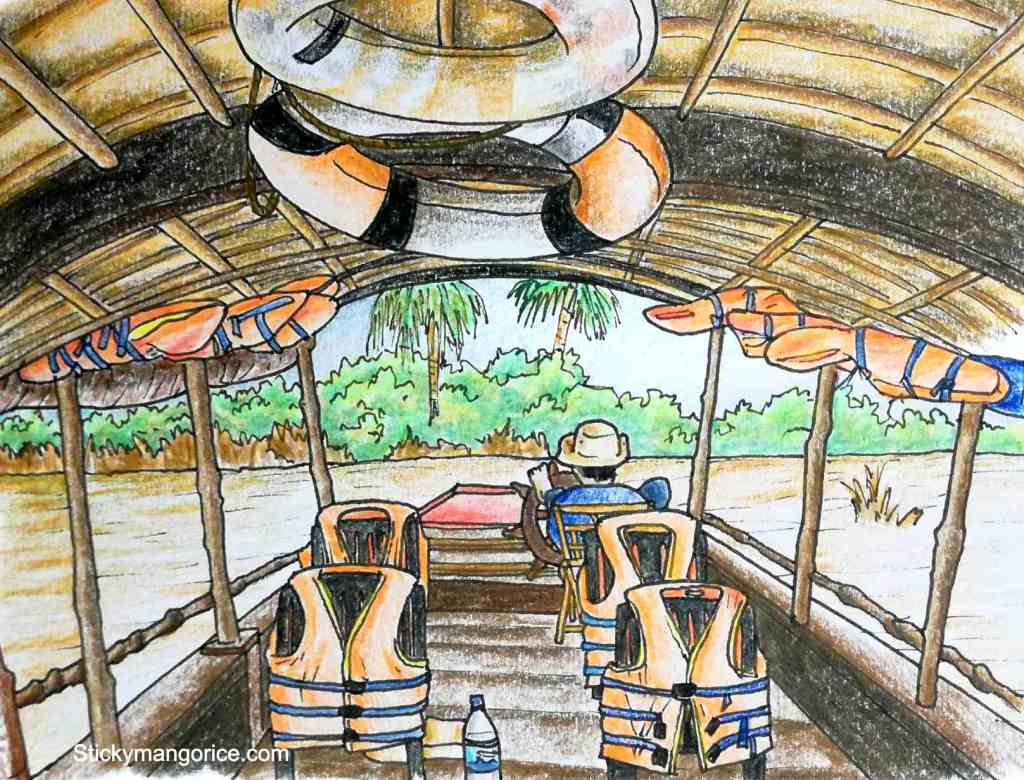
If you want to experience the floating markets of the Mekong delta, you can join a boat tour from nearby cities or towns, or rent a private boat with a driver and a guide. Born from convenient boat access around the waterways and islands of the delta, the floating markets are the perfect place to see a unique aspect of Vietnamese life in action.
 StickyMangoRice
Drawings ✍️ are so cool. Well done you!